Friday, November 7, 2014

The Little Things...
I was recently in an auto accident. I am fine, but my car isn't. It was totaled. It was an old car, circa 2000, but I liked it. It was a Volvo and very dependable. It may not have been the best looking car in the parking lot, with its many scratches and dings, but it was good to me. I will be renting a car for a week, then it will be time to look for something new, or at least newer. I don't care if a car is new, as long as it runs well, and gets me where I'm going. I live in a rural area, so I'm in my car a lot.
This past week, being home from work (my hands were badly bruised and swollen, especially my right, but thankfully not broken), I've had lots of time to think about things. I know it's been said many times before, but it really is the little things in life that make a big difference. This week, it was the little things I couldn't do. I couldn't hold my coffee mug. I struggled with getting dressed. I couldn't do a downward facing dog, never mind try to pet my dog.
As I pondered these things, it made me aware of the little things in the world-building of fiction. What are the little things a character struggles with, or the little things they do to gain attention? What are the little things he/she likes, or hates about a friend? What are the little things that make the setting seem real? What are the little things that make the reader want to keep reading?
 All of these little things work together to bring about the bigger picture in a story. So, don't rule out the little things as being important. Little things can make a big difference. Like clutching a favorite mug filled with warm, sweet coffee.
This past week, being home from work (my hands were badly bruised and swollen, especially my right, but thankfully not broken), I've had lots of time to think about things. I know it's been said many times before, but it really is the little things in life that make a big difference. This week, it was the little things I couldn't do. I couldn't hold my coffee mug. I struggled with getting dressed. I couldn't do a downward facing dog, never mind try to pet my dog.
As I pondered these things, it made me aware of the little things in the world-building of fiction. What are the little things a character struggles with, or the little things they do to gain attention? What are the little things he/she likes, or hates about a friend? What are the little things that make the setting seem real? What are the little things that make the reader want to keep reading?
Saturday, July 19, 2014
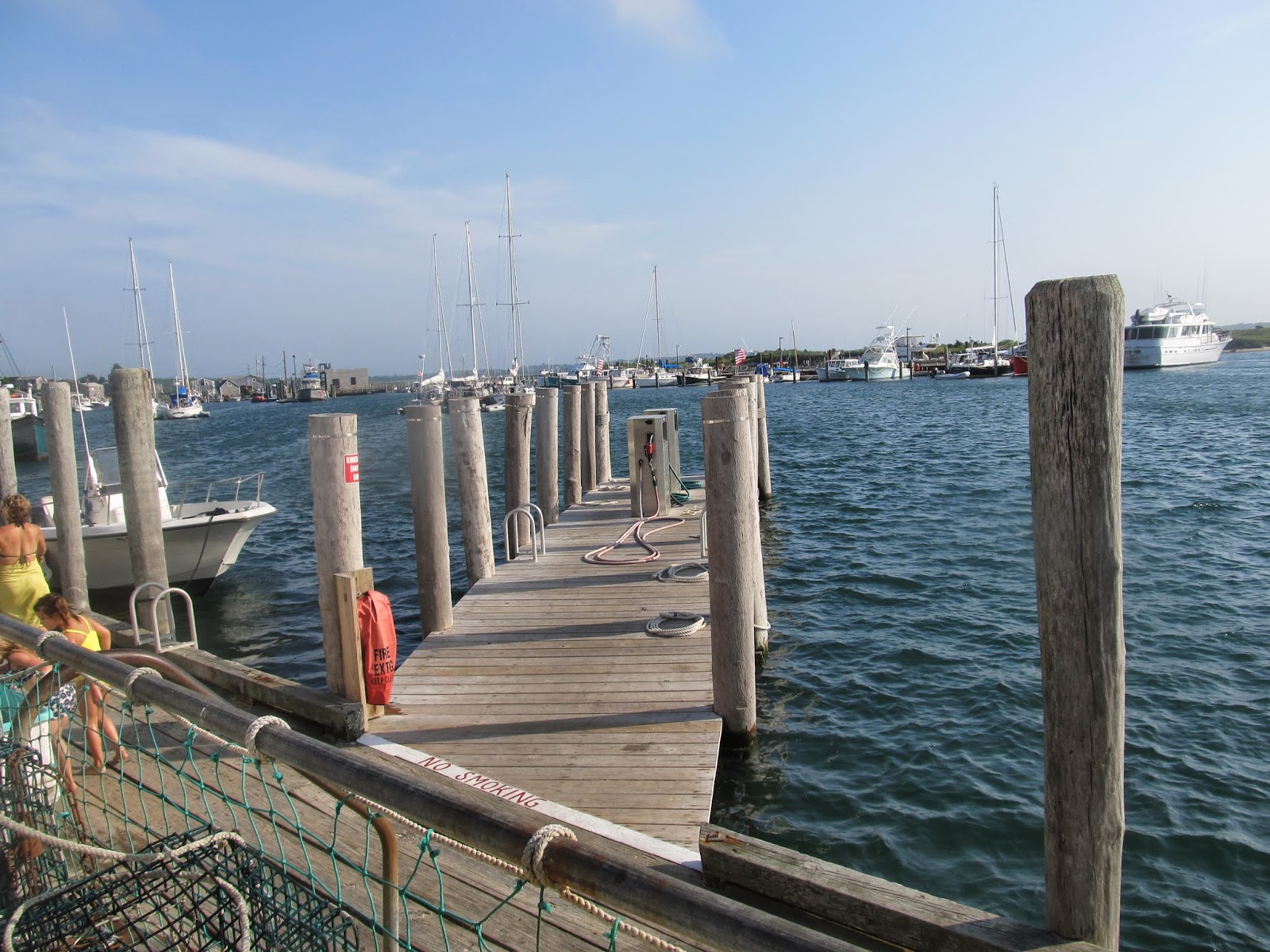
A Writer's Paradise

"Noepe has a very simple mission: to provide established and emerging writers with time and space to create, and the resources and community to support, encourage and inspire writers at all stages of their writing career."
 It was a small, intimate gathering of twelve women, all with works-in-progress in various genres and stages of development, and one wonderful mentor, Emma Dryden, of drydenbks. We spent each morning on a different topic, with hand-outs, writing exercises, and wisdom from Emma. Morning workshops focused on first pages, voice, world-building, and revision.
Nuggets gleaned from Emma's workshops:
- What you leave off the page, can be as important as what's on the page.
- The first line/page is the crystallization of the whole story.
- Most books use the home/away/home theme.
- Allow space for the reader's emotions.
- Create rules for the protagonist's world and a personal set for your protagonist.
- In the first draft, write with abandon! Keep it messy and do not edit!
- Paraphrase your story in ten pages, then five pages, then one page, one paragraph, one sentence.
- Cut the first paragraph and the last paragraph from each scene.
- List all the decisions your protagonist and antagonist makes. Do the same with supporting characters. The characters' decisions/actions should interfere with the protagonist's.
- List the first ten things each character does.
- Ask yourself why you have to write this story.

 My thoughts:
- I know what my protagonist really wants.
- I know why I have to write this story.
- Revision takes a long time and there are many processes to choose from.
- The scariest revision process is probably the one I should use.
- My beginning needed work, but I'm on the right track.
- Children's writers are bright, generous, and fun to be with. (Okay, I already knew that.)
- When you find a great mentor like Emma, feel fortunate. (I do!)
Sunday, December 29, 2013
A Poet's Dream
My sister is a poet. She's been a poet since the age of six. Or eight. Almost her whole life. And now, she has published a book of her poetry. The poems, she says, reveal the emotional journey of her life. The poems she has written over the course of a lifetime. I don't think the poem she wrote when she was six, or eight, are in the book, but poems she wrote in high school and college are included. The book is titled "Dream of the Antique Dealer's Daughter" after the second poem in the book. One of my favorites.
Robin always loved to read. If memory serves me, she was reading Anne of Green Gables in the 2nd grade. We called her the bookworm. She huddled on the couch with a book, even in the middle of summer. When some plaster fell from the living room ceiling, Robin didn't move from her spot on the couch. My mother found her reading, oblivious to what was happening. I was her opposite. Climbing trees, playing pick-up baseball games, making forts in the woods, for I was the tomboy, not a reader. But I was in awe of her. I remember finding her scribbles on pieces of paper around the house. I knew they were hers and sometimes wondered if she left them on purpose, so anyone could find them and read what she was going through at any given moment.
Robin's poems are haunting and lovely, full of emotional images that deserve to be read over and over. I am still in awe of my sister. How she writes with such passion and voice and raw intensity. How she puts personal snippets of her life in these small boxes called poetry. They are beautiful.
My brother's wife, Liz Smith, designed the cover of the book. After reading the poems several times, she wrote down words that evoked themes. Liz then used these words/themes to create personal pieces of the collage that became the cover art. There is a map of Moldova, a mannequin, books, shells and sand, even a painting of my father's. It's the minutia of the poet's dream. It's an amazing work of art, and a labor of love.

An excerpt from the poem on which the book is titled:
She floats above me:
the mannequin in my parent's shop.
I named her Cordelia
after a storybook character.
The color of coral, her face held
the secret of my growing self.
Robin Smith-Johnson, my sister, has published a book of poetry. My dad, the antique dealer, is surely smiling down from his place in paradise, so proud of his daughter for pursuing her dream.
"Dream of the Antique Dealer's Daughter" by Robin Smith-Johnson, published by Word Poetry, is available at Amazon and Barnes & Noble.
Robin always loved to read. If memory serves me, she was reading Anne of Green Gables in the 2nd grade. We called her the bookworm. She huddled on the couch with a book, even in the middle of summer. When some plaster fell from the living room ceiling, Robin didn't move from her spot on the couch. My mother found her reading, oblivious to what was happening. I was her opposite. Climbing trees, playing pick-up baseball games, making forts in the woods, for I was the tomboy, not a reader. But I was in awe of her. I remember finding her scribbles on pieces of paper around the house. I knew they were hers and sometimes wondered if she left them on purpose, so anyone could find them and read what she was going through at any given moment.
Robin's poems are haunting and lovely, full of emotional images that deserve to be read over and over. I am still in awe of my sister. How she writes with such passion and voice and raw intensity. How she puts personal snippets of her life in these small boxes called poetry. They are beautiful.
My brother's wife, Liz Smith, designed the cover of the book. After reading the poems several times, she wrote down words that evoked themes. Liz then used these words/themes to create personal pieces of the collage that became the cover art. There is a map of Moldova, a mannequin, books, shells and sand, even a painting of my father's. It's the minutia of the poet's dream. It's an amazing work of art, and a labor of love.

An excerpt from the poem on which the book is titled:
She floats above me:
the mannequin in my parent's shop.
I named her Cordelia
after a storybook character.
The color of coral, her face held
the secret of my growing self.
Robin Smith-Johnson, my sister, has published a book of poetry. My dad, the antique dealer, is surely smiling down from his place in paradise, so proud of his daughter for pursuing her dream.
"Dream of the Antique Dealer's Daughter" by Robin Smith-Johnson, published by Word Poetry, is available at Amazon and Barnes & Noble.
Friday, November 22, 2013
Simply Similes
Students shine as bright as the stars in the night sky. Once again, I want to share the similes my students have written. We read Tending to Grace by my good friend, Kim Fusco, to begin the year. It's my way of introducing the students to beautiful language, lovely descriptions, and sweet similes. Kim's first page shows the sad life of her protagonist, Cornelia, with these words:

The morning we wrote these, describing how we might feel as Cornelia, the students typed them on my laptop at the front of the room. They were projected on the board with an Elmo so everyone could see. The students lined up, eager to type. It was an exciting moment in our classroom.
I want to jump out of the car as it rushes along and wrap myself in a row of
sheets hanging so low their feet tap the grass. I want to hide because my life, if it were
a clothesline, would be the one with a sweater dangling by one sleeve, a blanket
dragging in the mud, and a sock, unpaired and alone, tumbling to the road with the wind
at its heel.

Here is a sample of my students' similes and descriptive writing:
I'm as fragile as ice hitting the ground.
I'm feeling as deadly as a war.
I'm as scared as deer getting hit by a car.
I'M AS MAD AS LAVA.
I'm as excited as a mad scientist who made a new potion.
I was as sad as a rock in the pouring rain.
I was as scared as a branch held by a thread.
I'm like a rock people kick down the street.
I'm like ice that will never melt.
I'm like the wind that has a harsh blow.
My feet are like soft jello.
I just stay there like a rag doll.
I'm as graceful as a prancing antelope.
I was so excited that I felt like I was about to explode all my madness.
The morning we wrote these, describing how we might feel as Cornelia, the students typed them on my laptop at the front of the room. They were projected on the board with an Elmo so everyone could see. The students lined up, eager to type. It was an exciting moment in our classroom.
Monday, October 14, 2013
Filling in the Holes...
I'm in the middle of my 2nd draft of Fairy Girl, a middle grade novel, and finding lots of holes. While walking with my friend, Kim Fusco, we talk about writing. What's working, what we're struggling with, etc. She likens revising to filling in the holes. I like that. I sometimes feel like I'm filling in huge potholes or shoveling dirt into a crater. But she confirmed to me how I was feeling. After writing the first draft and working on the next, discovering holes in the story is common. What happened to that story line? Did the mom disappear? Where is Wilbur, the cat? Why did I include that scene?
Walking and talking has become part of my writing process. I often walk with my dog, Hannah. If I'm having trouble with a plot line or unclear about a character, almost always, the answer comes while I'm taking in the fresh air and the scenic views around me. There's something therapeutic about walking. Talking works just as well. I talk to my sisters or my writer friends. My mom, too. They help me by asking questions. What if Gracie gets caught riding her bike? What is Hen's role in the story? Where did she go?

So, while you're working on revising, remember it's about making discoveries and filling in the holes.
Walking and talking has become part of my writing process. I often walk with my dog, Hannah. If I'm having trouble with a plot line or unclear about a character, almost always, the answer comes while I'm taking in the fresh air and the scenic views around me. There's something therapeutic about walking. Talking works just as well. I talk to my sisters or my writer friends. My mom, too. They help me by asking questions. What if Gracie gets caught riding her bike? What is Hen's role in the story? Where did she go?

So, while you're working on revising, remember it's about making discoveries and filling in the holes.
Saturday, August 10, 2013
The Teachers go to Birmingham - 2013

I spent five incredible days in Alabama, with 43 other teachers as part of the Teaching American History (TAH) program, a federally funded grant program teamed up with the Rhode Island Historical Society (RIHS) and the Gilder Lehrman Institute of American History. One of the goals of this project is to give teachers more content knowledge and a greater understanding of traditional American history and to help bring this content to life in the classroom. In my estimation, this program has achieved that and more.

We traveled along the Freedom Trail through Birmingham, Selma, Montgomery, and Tuskegee. We visited museums, Civil Rights Institutes, churches, one-room school houses, and Tuskegee University. It was a fascinating and poignant look at the Civil Rights movement in the early 60's. The people we met told us stories that made us cry and stories that made us sit up and take notice. Many of them were teens at the time of the movement and some were "foot soldiers." These were people and children who marched for civil rights and were often incarcerated just for marching peacefully in a public place. Hundreds, sometimes thousands, would be arrested for marching. The children could not reveal their names for if they did, their parents would lose their jobs. They would be held in barns or large fields until placed in jail cells, and often would be held for days, even weeks. They would be wearing the same clothes and given little food. But they weren't afraid. They had faith and that's what kept them going.

It was a spiritual movement and they often sang spirituals while waiting to be freed or working together. They were taught to be nonviolent at an early age. They knew that if they fought back, it would become an "all-out war," and this was a peaceful movement. They met in churches. Monday Meetings, they called them, where they organized themselves and were given lessons on how to be nonviolent.


We visited Dr. Martin Luther King Jr.'s church in Montgomery where he was pastor beginning at the age of 24, and his parsonage where two of his children were born. We went to the 16th Street Baptist Church in Birmingham where four young girls were killed during a bombing. We toured Tuskegee Institute and Booker T. Washington's home. Two of the students gave us a tour of the home and told us how the first students made the bricks that were used to build the institute. "Founded in a one room shanty, near Butler Chapel AME Zion Church, thirty adults represented the first class - Dr. Booker T. Washington the first teacher. The founding date was July 4, 1881, authorized by House Bill 165."

In Selma, we walked two-by-two over the Edmund Pettus Bridge where in 1965 armed policeman attacked peaceful civil rights marchers who were marching for the right to vote. Bloody Sunday, as it is now called. This horrific event helped to bring about change and The Voting Rights Act of 1965, making discriminatory voting practices illegal.
As teachers of history, it is now our mission to bring this piece of our country's history back to our students, without "watering down" what really happened. Everyone should take the Freedom Walk and discover what the Civil Rights Movement was truly all about. And how it continues today...
Subscribe to:
Posts (Atom)